Nelson Mandela’s Net Worth: A Look at the Finances of a Global Freedom Icon
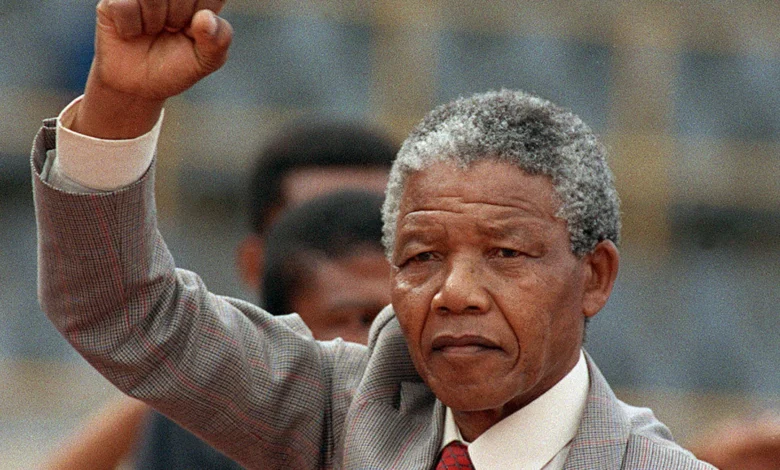
Nelson Mandela was a South African freedom fighter, anti-apartheid leader, statesman, and humanitarian whose estimated net worth stood at about $1 million when he passed away in December 2013. He made history as South Africa’s first Black president, serving from 1994 to 1999 after the end of apartheid.
Most of Mandela’s personal wealth came from royalties earned from his globally bestselling autobiography, Long Walk to Freedom, published in 1994. While his health allowed, he also generated income through occasional public speaking engagements. During his presidency, Mandela voluntarily reduced his salary and consistently donated roughly one-third of his earnings to charities supporting South African children.
In his later years, disputes arose among family members over his estate. Mandela was married three times and had six children, only three of whom were alive at the time of his death. To avoid conflict and ensure long-term support, he placed most of his assets into more than a dozen trusts designed to benefit his children and grandchildren. As a result, Mandela did not personally hold significant liquid wealth. In April 2013, his close friend and lawyer George Bizos clarified that Mandela was not a multimillionaire, emphasizing that donated funds were always directed toward building schools, hospitals, and public welfare projects.
Nelson Rolihlahla Mandela was born on July 18, 1918, in Mvezo, near Umtata in South Africa’s former Cape Province. His middle name, “Rolihlahla,” translates to “troublemaker” in Xhosa. He descended from Thembu royalty; his paternal great-grandfather was a Thembu king, and his father served as a local chief and royal advisor. Mandela’s father had multiple wives and children, and Nelson was raised by his mother, the third wife, alongside his sisters in the village of Qunu.
At age seven, Mandela began attending a Methodist school, where he was given the English name “Nelson.” After his father died when Mandela was nine, he was sent to live under the care of a Thembu regent in Mqhekezweni. Deeply influenced by Christianity, he continued his education at Methodist institutions. At 15, he enrolled at Clarkebury Methodist High School and later attended the University of Fort Hare in 1939, studying arts and social sciences. His involvement in student activism led to his suspension, after which he moved to Johannesburg and completed his degree through the University of South Africa. He then chose to pursue a career in law.
Mandela enrolled at the University of the Witwatersrand to study law, where he experienced frequent racial discrimination as the only Black student. During this period, his political awareness deepened, and he became committed to the idea that South Africans deserved full political rights. By the late 1940s, he was actively involved in protests, strikes, and boycotts against apartheid policies.
Although his activism disrupted his studies, Mandela remained committed to the struggle. In 1950, he rose to leadership roles within the African National Congress (ANC) and its Youth League. His political thinking evolved over time, including an openness to socialist ideas after reading Marxist literature. In 1952, while working at a law firm, Mandela helped organize the Defiance Campaign against unjust laws, inspired by the nonviolent resistance philosophy of Mahatma Gandhi. That same year, he was arrested and convicted under anti-communism laws, receiving a suspended prison sentence. He later qualified as a lawyer and co-founded the country’s first Black-owned law firm.
By the mid-1950s, Mandela concluded that peaceful protest alone would not dismantle apartheid. He worked with other leaders to draft the Freedom Charter, which called for a democratic, non-racial South Africa. In 1956, he and many others were charged with high treason. After a lengthy trial that lasted several years, Mandela was acquitted in 1961. Soon afterward, he helped organize acts of sabotage targeting infrastructure, aimed at pressuring the government rather than harming civilians.
Mandela was arrested multiple times during the early 1960s. In 1964, following the Rivonia Trial—during which he delivered his iconic “I Am Prepared to Die” speech—he was sentenced to life imprisonment. He spent 18 years on Robben Island under harsh conditions before being transferred to Pollsmoor Prison in 1982. In 1985, he rejected conditional release that required him to renounce armed resistance. Mandela was finally freed unconditionally in 1990.
After his release, he played a central role in negotiations that ended apartheid. Despite periods of unrest, Mandela guided South Africa through a peaceful transition to democracy. In 1994, he was elected president and led the nation toward reconciliation and inclusive governance.
Mandela stepped down from public office in 1999 but remained active in charitable and humanitarian work. His primary source of income continued to be royalties from Long Walk to Freedom. He was married three times: first to Evelyn Mase, with whom he had three children; then to Winnie Mandela, with whom he had two children; and finally to Graça Machel in 1998. Nelson Mandela died on December 5, 2013, at the age of 95, following a prolonged respiratory illness. He was laid to rest in his childhood village of Qunu in South Africa’s Eastern Cape.