Mahatma Gandhi’s Net Worth: The History’s Greatest Leader Who Lived Without Riches
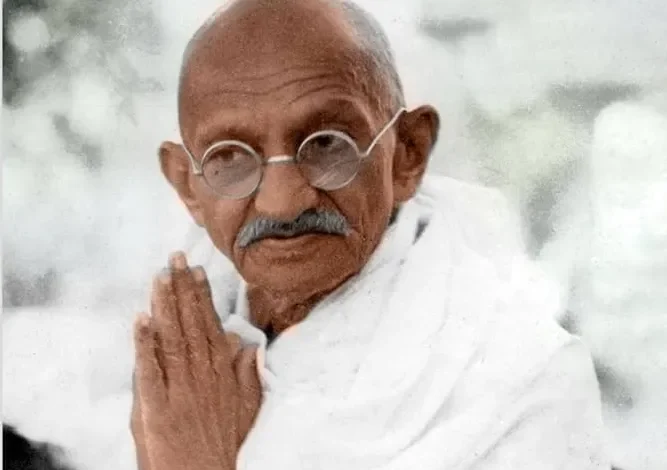
Mahatma Gandhi was an Indian nationalist leader whose personal wealth was famously estimated at just $1. He was born in October 1869 in Porbandar, within the Kathiawar Agency of British India, and was assassinated in January 1948. Despite sharing the surname, he was not connected to the well-known political Gandhi family that later became prominent in Indian politics under figures such as Sonia Gandhi.
Gandhi emerged as the central figure in India’s struggle for independence from British colonial rule, relying on nonviolent resistance and civil disobedience rather than armed conflict. His leadership helped guide India to freedom and influenced civil rights and liberation movements worldwide. After working as a lawyer in South Africa, where he confronted systemic racial discrimination, he returned to India and rose to lead the Indian National Congress. He organized landmark protests such as the 1930 Dandi Salt March against the British salt tax and the Quit India Movement in 1942. Throughout his life, Gandhi spent many years imprisoned in both South Africa and India. Known for his ascetic lifestyle and frequent fasting, he came to be revered as the father of the Indian nation. His birthday is observed as a national holiday in India and internationally recognized as the International Day of Nonviolence. The honorific “Mahatma,” meaning “great-souled” or “venerable,” was first used for him in 1914. He was assassinated on January 30, 1948, at the age of 78.
Gandhi believed that lasting social change could only be achieved through peaceful resistance. He prepared himself for this mission through self-discipline, personal sacrifice, and the cultivation of moral, spiritual, and psychological resilience.


Mohandas Karamchand Gandhi was born on October 2, 1869, in Porbandar, Gujarat. He was the youngest child of Karamchand Gandhi, a chief minister in the region, and Putlibai, his father’s fourth wife. Gandhi had three siblings, including brothers Laxmidas and Karsandas and a sister, Raliatbehn. In 1874, the family moved to Rajkot, where his father worked as an adviser to the local ruler. Gandhi attended local schools and later Alfred High School, where he performed as an average student.
At the age of thirteen, Gandhi entered an arranged marriage with fourteen-year-old Kasturbai Kapadia. Their first child was born in 1885 but died shortly after birth. After completing high school in 1887, Gandhi briefly attended Samaldas College before leaving his studies. He later traveled to London to study law, enrolling at University College London and training at the Inns of Court.
In 1893, Gandhi accepted legal work representing an Indian merchant in South Africa. He moved there with his family, including his sons Harilal and Manilal. While in South Africa, he helped establish the Natal Indian Congress to support the political rights of Indians. Two more sons, Ramdas and Devdas, were born in 1897 and 1900. During this period, Gandhi endured severe racial discrimination, including physical attacks and arrests for refusing to submit to humiliating colonial rules.
During the Boer War, Gandhi organized the Natal Indian Ambulance Corps, recruiting over a thousand volunteers to assist wounded soldiers. Later, when discriminatory registration laws targeted Indians and Chinese residents, he called for peaceful noncompliance. To raise awareness, he founded the newspaper Indian Opinion and established Tolstoy Farm near Johannesburg, a communal settlement focused on self-reliance.
By 1914, Gandhi had adopted a simple lifestyle, wearing homespun clothing to identify with the poor and practicing long fasts as a form of protest. He returned to India in 1915 and began organizing campaigns for farmers and laborers facing unfair taxation. His efforts led to successful negotiations that reduced financial burdens on peasants and secured the release of imprisoned protesters. He formally joined the Indian National Congress and, during World War I, controversially encouraged Indian participation, arguing that moral resistance required understanding the nature of violence before rejecting it.
In 1919, Gandhi was arrested for opposing the Rowlatt Act, which allowed arbitrary detention by British authorities. After his release, he intensified his political activities and assumed leadership of the Indian National Congress in 1921. He launched nationwide movements against poverty, discrimination, and foreign rule, urging Indians to boycott British goods to weaken colonial control. This led to another arrest in 1922 and a six-year prison sentence, though he was released early.
In 1930, Gandhi led a 250-mile march to protest the salt tax, a defining moment in India’s independence struggle. The following year, the Gandhi-Irwin Pact resulted in the release of political prisoners and a temporary pause in civil disobedience. He later participated in negotiations with British leaders but continued pressing for independence. In 1942, his “Quit India” speech led to another imprisonment.
India finally gained independence in 1947, but partition into India and Pakistan triggered widespread communal violence. In response, Gandhi began a hunger strike in January 1948, appealing for peace and unity. On January 30, while attending an interfaith prayer meeting in New Delhi, he was assassinated by Nathuram Godse, a Hindu nationalist, bringing an end to the life of one of the world’s most influential advocates of nonviolence.