Jesse Jackson’s Net Worth: A Look at the Civil Rights Leader’s Wealth
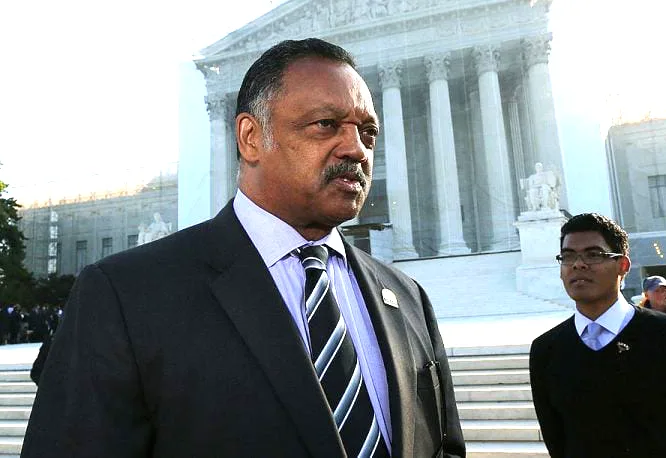
Jesse Jackson was a prominent American civil rights activist, Baptist minister, and political leader with an estimated net worth of $4 million. He passed away on February 17, 2026, at the age of 84. A close protégé of Dr. Martin Luther King Jr., Jackson rose to national prominence during the civil rights movement of the 1960s. He worked alongside King in the Southern Christian Leadership Conference (SCLC) before founding his own initiatives, including Operation PUSH (People United to Save Humanity) in 1971 and the National Rainbow Coalition in 1984, both aimed at advancing political representation, economic empowerment, and social justice for African Americans and other marginalized communities.
Jackson became a leading voice for progressive causes, advocating for voting rights, equitable education, and workplace fairness. Renowned for his charismatic speeches and ability to unify diverse communities, he ran for the Democratic presidential nomination in 1984 and 1988, becoming the first African American to mount a serious nationwide campaign. His 1988 run was historic, winning several primaries and mobilizing minority and working-class voters.
Beyond domestic activism, Jackson engaged in humanitarian and diplomatic work, negotiating the release of hostages and political prisoners in Syria, Cuba, and Iraq. His contributions earned him global recognition, including the Presidential Medal of Freedom in 2000. Despite occasional controversies, Jackson’s legacy as a civil rights champion and political trailblazer remains enduring.


Jackson’s financial profile reflects decades of activism and public engagement. In 1987, a Chicago Tribune investigation noted that his wife Jacqueline held most family assets, estimated at $400,000–$600,000 at the time (around $1.2–$1.7 million today). In 2001, his financial disclosure revealed he earned $120,000 annually from his organizations and an additional $5,000 per week from CNN for hosting Both Sides with Jesse Jackson. Travel expenses for his organizations totaled $614,000, partially offset by $450,000 reimbursed by the Democratic National Committee for voter mobilization efforts. Jackson’s lifetime wealth is estimated at $4 million, accumulated through his ministry, advocacy work, speaking engagements, media appearances, and organizational leadership.
Born Jesse Louis Burns on October 8, 1941, in Greenville, South Carolina, he was the son of 16-year-old Helen Burns and 33-year-old married neighbor Noah Louis Robinson. After his mother married Charles Henry Jackson in 1943, Jesse was adopted and took his stepfather’s surname. Growing up under Jim Crow segregation, he faced systemic racial discrimination, from separate drinking fountains to restricted seating on buses. These early experiences of injustice shaped his commitment to equality, while his natural charisma and public speaking ability foreshadowed his future leadership.
Jackson excelled academically and athletically at Sterling High School in Greenville, graduating tenth in his class and serving as student body president. He initially accepted a football scholarship to the University of Illinois but transferred after one year to North Carolina A&T State University, a historically Black college, where he became a student leader, fraternity member, and emerging civil rights activist inspired by the Greensboro sit-ins of 1960. He earned a bachelor’s degree in sociology in 1964 and pursued a Master of Divinity at Chicago Theological Seminary but left in 1966 to engage full-time in civil rights work, later receiving his degree in 2000 in recognition of his activism.
Jackson’s early activism began with sit-ins challenging segregation in Greenville libraries in 1960. He joined the SCLC in the mid-1960s, working closely with King and leading the Chicago branch of Operation Breadbasket, which pressured corporations to hire Black employees and invest in underserved communities. Following King’s assassination, Jackson founded Operation PUSH to continue economic empowerment and voter engagement programs. In 1984, he launched the National Rainbow Coalition, uniting diverse marginalized communities into a multiracial political movement.
Jackson’s political influence extended to presidential campaigns, where he ran in 1984 and 1988, energizing minority voters and pushing progressive causes to the forefront. He later served as an unofficial D.C. “statehood senator” from 1991 to 1997, advocating for voting rights and political reform. Over the years, Jackson supported Democratic candidates, including Bill Clinton, Barack Obama, Hillary Clinton, and Bernie Sanders, leveraging his platform to mobilize voters and influence national politics.
Jackson also leveraged media platforms, hosting CNN’s Both Sides with Jesse Jackson from 1992 to 2000. Internationally, he engaged in high-profile diplomacy, helping secure the release of hostages and political prisoners, enhancing his reputation as a global advocate for justice and humanitarian causes.
Jesse Jackson married Jacqueline Lavinia Brown in 1962, and they had five children: Santita, Jesse Jr., Jonathan, Yusef, and Jacqueline. Several of his children followed him into public life, including Jesse Jackson Jr., a former U.S. Congressman, and Jonathan Jackson, a current representative for Illinois’s 1st Congressional District. In 2001, he publicly acknowledged another daughter, Ashley, from a 1999 relationship. Jackson faced personal and family challenges, including his son’s imprisonment in 2013, but remained committed to advocacy and public service until his death.
Jesse Jackson’s passing in 2026 marked the end of a life dedicated to civil rights, political empowerment, and social justice, leaving behind a legacy that continues to inspire activism worldwide. His net worth of $4 million reflects a lifetime spent influencing change rather than accumulating personal wealth.