Abdulsamad Rabiu BUA’s Net Worth: From Trading Roots to Africa’s Industrial Elite
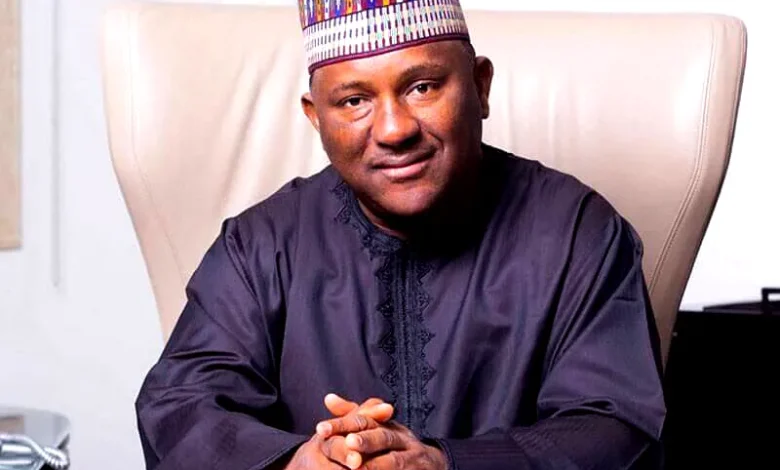
Abdulsamad Isyaku Rabiu, known as BUA, is a leading Nigerian industrialist whose wealth has expanded significantly over the years. Based on the latest updates from Forbes and the Bloomberg Billionaires Index (2024–2025), his net worth is now estimated to be between $5 billion and $7 billion, a sharp rise from older figures that placed him below the billionaire threshold. This valuation firmly positions Rabiu among the richest individuals in Africa and consistently ranks him as one of Nigeria’s top three wealthiest citizens and behind Aliko Dangote, depending on market movements and asset valuations. The overwhelming majority of his fortune is tied to his controlling stake in BUA Group, a diversified conglomerate with deep roots in Nigeria’s industrial sector.
BUA Group is one of Nigeria’s most influential privately owned conglomerates, with operations spanning cement manufacturing, sugar refining, flour milling, steel production, real estate development, ports and terminal management, shipping, logistics, and energy-related services. The group has played a major role in reducing Nigeria’s dependence on imported industrial goods. One of its most notable infrastructure assets is BUA Cement 1, a 200-meter-long vessel engineered to handle heavy bulk cargo. This ship serves as Nigeria’s first floating cement terminal, enabling more efficient coastal distribution and lowering transportation costs across the country.
A defining feature of Rabiu’s wealth-building strategy has been his shift from trading to large-scale local manufacturing. BUA Cement and BUA Foods are now among the most dominant players in their respective markets and are both listed on the Nigerian Exchange, enhancing transparency and investor confidence. These businesses benefit from economies of scale, vertical integration, and alignment with government policies that encourage domestic production. Through aggressive capacity expansion, BUA Group has become a strong competitor to long-established industrial giants, reshaping Nigeria’s cement and food-processing industries.


In addition to his Nigerian business interests, Abdulsamad Rabiu maintains a portfolio of high-value international real estate, reflecting a strategy of global wealth diversification. Reports confirm that he owns luxury properties in the United Kingdom and South Africa, previously valued at over $80 million combined, though figures may vary with market conditions. Among these assets is a prestigious residence in Gloucester Square, London, estimated at nearly $16 million, as well as an upscale penthouse at the One&Only Hotel and Private Residences in Cape Town, valued at more than $12 million. These holdings underscore his preference for stable, premium locations.
Rabiu was born in Kano State into the household of Isyaku Rabiu, one of Nigeria’s most respected businessmen during the post-independence era. His father amassed considerable wealth through trading and manufacturing at a time when Nigeria’s private sector was still developing. By the mid-1970s, Isyaku Rabiu had become both economically powerful and politically influential, with strong connections within Nigeria’s leadership circles. Growing up in this environment exposed Abdulsamad to commerce early, even though his direct business involvement came later.
The family’s fortunes were disrupted following the 1983 military coup that removed President Shehu Shagari from office. During the political shake-up, several prominent businessmen were detained, including Isyaku Rabiu. At that time, Abdulsamad was in the United States, completing a bachelor’s degree in economics. When he returned to Nigeria at just 24 years old, he found the family business severely weakened by asset seizures, policy restrictions, and operational decline, forcing him into an unexpected leadership position.
With limited hands-on experience but a strong sense of responsibility, Rabiu chose to rebuild rather than abandon the enterprise. In 1988, he launched what would become BUA Group, initially focusing on the importation of rice, sugar, edible oils, steel products, and iron rods. Operating in a challenging economic climate, he relied on calculated risk-taking, persistence, and strategic relationships to stabilize operations and generate steady cash flow. These early years laid the financial foundation for future expansion.
Rabiu’s transformation from a modest trader into a multi-billionaire came through a series of bold and often unconventional decisions, particularly his heavy investment in capital-intensive industries. By reinvesting profits and prioritizing long-term scale over short-term gains, he steadily turned millions into billions. Today, beyond business success, he is also recognized for philanthropy in education, healthcare, and social development, reinforcing his influence across both economic and social spheres.