Mojtaba Khamenei’s Net Worth, Biography and Political Influence
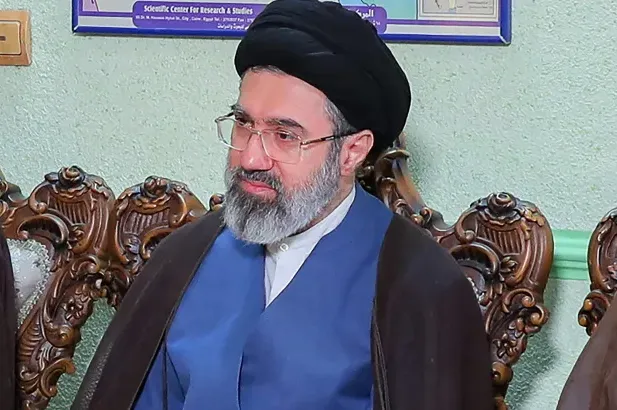
Mojtaba Khamenei is an Iranian cleric and influential political figure widely known as the second son of Ayatollah Ali Khamenei, the longtime Supreme Leader of Iran. Mojtaba Khamenei’s net worth is widely estimated to range between $2 billion and $5 billion, based on various international reports and financial analyses. However, the exact size of his fortune remains difficult to verify because senior Iranian political figures do not publicly disclose personal financial records. Most estimates come from investigative journalism and research examining financial networks believed to be connected to Iran’s ruling establishment rather than confirmed personal asset declarations.
Mojtaba Khamenei was born on September 8, 1969, in Mashhad, Iran, and grew up in a prominent religious and political household. His early years coincided with a period of major transformation in Iran, including the 1979 Islamic Revolution, which led to the establishment of the Islamic Republic. Being the son of Ali Khamenei placed him close to the country’s clerical leadership and power structure from a young age.
Like many members of Iran’s religious elite, Mojtaba Khamenei pursued formal studies in Islamic seminaries (hawzas), particularly in the city of Qom, one of the most important centers of Shia scholarship. Through his religious education he attained the clerical rank of hojatoleslam, a mid-level title within the Shiite clerical hierarchy that reflects years of theological training and study.


During the Iran–Iraq War in the 1980s, Mojtaba Khamenei reportedly served in the Habib Battalion of the Islamic Revolutionary Guard Corps (IRGC). His involvement in the war allowed him to develop relationships with individuals who later rose to powerful positions within Iran’s military and intelligence institutions. These connections strengthened his ties to the Revolutionary Guard, an organization that plays a major role in Iran’s political, security, and economic system.
Although Mojtaba Khamenei has never run for public office or participated in a national election, he has long been considered an influential figure within Iran’s inner political circle. Over the years he has built strong relationships with key institutions such as the IRGC and the Basij paramilitary forces, giving him significant influence behind the scenes in the country’s political structure.
For many years analysts speculated that Mojtaba Khamenei could eventually become a successor to his father. Ayatollah Ali Khamenei served as Iran’s president for nearly eight years before becoming supreme leader in 1989, a position he held for more than three decades. His leadership gave him broad authority over Iran’s military, political, and judicial institutions.
Reports circulating in Iranian state media claimed that Mojtaba Khamenei was selected as the country’s new supreme leader after the reported death of his father during a military confrontation involving the United States and Israel. According to those reports, Iran’s Assembly of Experts, the 88-member clerical council responsible for appointing the supreme leader, stated that he had been chosen through what it described as a “decisive vote.” The council also urged citizens, scholars, and intellectuals to maintain unity and pledge support to the leadership.
Despite his influence, Mojtaba Khamenei has maintained a relatively low public profile throughout his life. Unlike many senior clerics in Iran, he rarely delivers public speeches, Friday sermons, or official political addresses. As a result, many Iranians recognize his name but have seldom heard him speak publicly.
In addition to political influence, several Western media investigations have suggested that Mojtaba Khamenei may be connected to financial networks linked to Iran’s elite institutions. The $2 billion to $5 billion net worth estimate often cited in discussions about his wealth comes mainly from investigative reporting and policy analysis rather than official financial disclosures.
One of the most frequently referenced sources is a 2013 Reuters investigation that examined the financial empire connected to institutions associated with Iran’s supreme leadership, particularly an organization known as Setad (Execution of Imam Khomeini’s Order). The report estimated that Setad controlled assets worth roughly $95 billion, illustrating the vast economic influence surrounding Iran’s leadership circle.
Additional reporting by Bloomberg explored alleged financial connections between figures within Iran’s political establishment and certain banking institutions. One report discussed links between Mojtaba Khamenei and Iranian businessman Ali Ansari, whose Bank Ayandeh later collapsed after accumulating large debts through controversial loans. The Iranian government eventually dissolved the bank, and the financial fallout contributed to inflation and economic pressure within the country.
Neither Mojtaba Khamenei nor Ali Ansari has publicly addressed the allegations about their supposed financial connections. Some investigations have also suggested that networks connected to Iranian elites may have invested in luxury real estate in parts of Europe, although detailed ownership records remain unclear.
Another issue sometimes raised by analysts concerns Mojtaba Khamenei’s clerical rank. He currently holds the title of hojatoleslam, which is lower than the rank of ayatollah usually associated with senior religious leadership. However, his father also did not hold the ayatollah title when he became supreme leader in 1989, and Iran’s constitutional framework was adjusted at the time to allow his appointment. Observers note that a similar legal adjustment could theoretically occur again.
Despite maintaining a relatively quiet public presence for much of his life, Mojtaba Khamenei has gradually become one of the most influential figures within Iran’s political system. His connections with powerful institutions such as the Revolutionary Guard, combined with the financial networks often associated with the country’s ruling establishment, have placed him at the center of discussions about the future leadership and direction of the Islamic Republic.