Ali Khamenei’s Net Worth: An In-Depth Look at the Iranian Leader’s Wealth
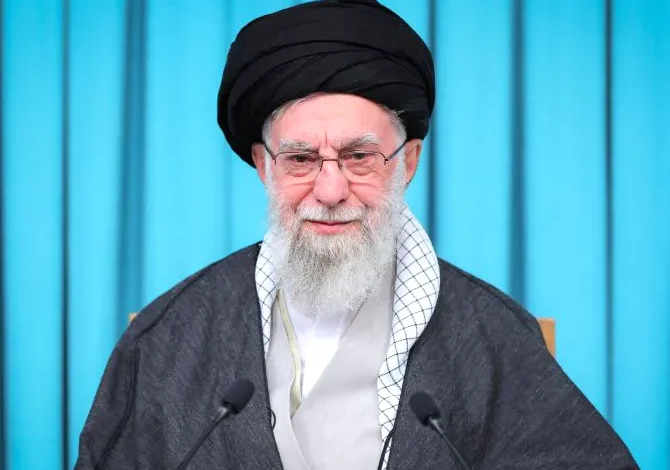
Ali Khamenei, Iran’s Supreme Leader and a senior Shi’a cleric, is officially reported to have a personal net worth of about $50,000. Despite this modest figure, Ayatollah Ali Khamenei stands as one of the most influential and mysterious power brokers in today’s Middle East. Since assuming the role of Supreme Leader in 1989, he has held authority that far exceeds that of Iran’s elected officials, exercising ultimate control over the armed forces, judiciary, state media, and the country’s foreign relations. Educated as a cleric in Qom, Khamenei rose through the ranks as a trusted follower of Ayatollah Ruhollah Khomeini, the leader of the 1979 Islamic Revolution. After a short and turbulent presidency in the early years of the new republic, he became Supreme Leader following Khomeini’s death, even though he lacked the highest traditional clerical qualifications typically required for the position.
Over more than thirty years in power, Khamenei has skillfully neutralized opponents, unified Iran’s ruling establishment under his influence, and endured sustained international pressure. While he promotes an image of humility and religious devotion, he has also been associated with an enormous and largely opaque financial network—often estimated at over $200 billion—managed through an organization known as Setad. This blend of spiritual authority, military loyalty, and economic leverage has secured his position as Iran’s undisputed leader and a key figure in global politics.
Ali Hosseini Khamenei was born on July 17, 1939, in Mashhad, Iran, into a family with limited financial means but strong religious credentials. His father was a respected cleric, and Khamenei followed a traditional path of Islamic education from a young age. He later continued advanced religious studies in Qom, Iran’s foremost center for Shi’a scholarship. There, he encountered leading clerics of the era, most notably Ayatollah Ruhollah Khomeini, whose opposition to monarchy and Western influence left a lasting mark on Khamenei’s political and religious outlook.


Note: Some historical sources cite his birth year as 1935, though official Iranian records typically list 1939.
Khamenei became politically active during the 1960s, openly resisting the Shah’s secular, pro-Western government. His activism led to repeated arrests, periods of imprisonment, and brief exile. When the 1979 Islamic Revolution toppled Shah Mohammad Reza Pahlavi, Khamenei quickly emerged as a prominent figure within the new Islamic Republic. He served on the Revolutionary Council and later rose to national prominence after becoming Iran’s third president in 1981, following the assassination of the previous officeholder.
During his presidency, which coincided with the Iran–Iraq War from 1980 to 1988, Khamenei worked closely with powerful clerical leaders and security institutions. Although he did not hold the religious rank of marja—traditionally expected of a Supreme Leader—his close relationship with Ayatollah Khomeini and his strong political alliances made him a consensus choice to succeed Khomeini after his death in 1989.
Khamenei’s elevation to Supreme Leader marked a decisive shift in Iran’s power structure. Over time, he expanded the authority of the position beyond its original scope. By asserting control over the Islamic Revolutionary Guard Corps, the judiciary, and state broadcasting, he entrenched himself at the core of Iranian governance. While presidents and lawmakers change, Khamenei remains the ultimate arbiter, shaping laws, influencing electoral outcomes, and directing foreign policy from behind the scenes.
He has presided over Iran’s disputed nuclear ambitions, navigated years of international sanctions, and responded to internal dissent with a mix of repression and limited concessions. Observers often describe his leadership style as ideologically rigid yet tactically flexible, prioritizing regime survival above all else.
Despite projecting a simple lifestyle, Khamenei has long been connected to a massive and secretive economic structure centered on Setad, formally known as Setad Ejraiye Farmane Hazrate Emam. The organization was initially established in 1989 to manage properties left behind after the revolution. Intended as a temporary body, Setad instead evolved into a powerful conglomerate under Khamenei’s oversight.
Its holdings span multiple sectors, including real estate, telecommunications, banking, and pharmaceuticals. A 2013 Reuters investigation estimated Setad’s assets at no less than $95 billion, while later assessments by U.S. officials suggested the figure could approach $200 billion. Many assets were reportedly acquired through controversial property confiscations, particularly from religious minorities such as the Baha’i community and from individuals linked to the former monarchy. Although the wealth is not officially classified as Khamenei’s personal property, Setad operates under his direct authority, granting him extraordinary financial influence with minimal transparency.
During the COVID-19 crisis, Setad played a visible role by producing Iran’s first locally developed vaccine, COVIran Barekat. Khamenei publicly received the vaccine on live television, reinforcing both confidence in the product and Setad’s prominence in Iranian society.
Ayatollah Ali Khamenei married Mansoureh Khojasteh Baqer Zadeh in 1964, and the couple has six children—four sons and two daughters. Very little information is publicly available about his family, reflecting the strict privacy surrounding the Supreme Leader’s personal life. While most of his children avoid public roles, one son, Mojtaba Khamenei, is frequently rumored to wield considerable behind-the-scenes influence within Iran’s political system.