Muammar Gaddafi’s Net Worth: How the Libyan Leader Amassed His Vast Fortune
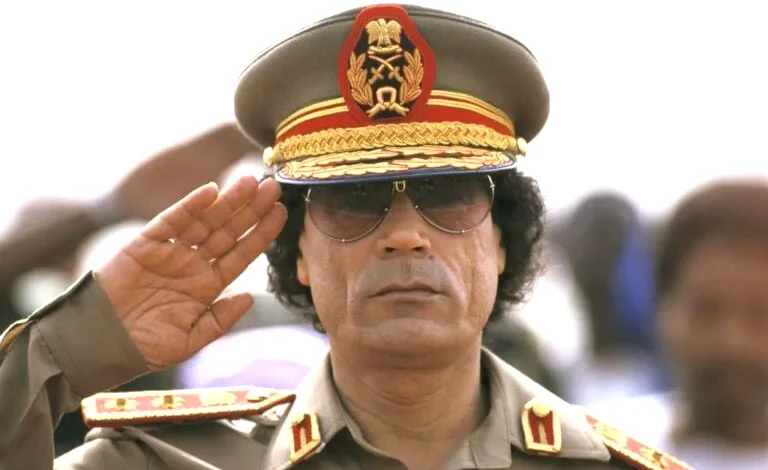
Muammar Gaddafi ruled Libya for more than four decades and accumulated an estimated fortune of at least $70 billion at the height of his power. He stood as Libya’s longest-ruling leader since the era of Ottoman control and, until his death, remained the longest-serving non-royal head of state in the modern world. His 42-year grip on power was marked by constant controversy, political repression, and repeated episodes of unrest. In February 2011, simmering dissatisfaction exploded into nationwide protests that quickly escalated into violent clashes, with state security forces accused of brutally suppressing civilians.
As rebel groups gained momentum, Gaddafi was driven from office and forced into hiding. The United States and NATO publicly urged him to surrender and end the bloodshed. After months of evading capture, he was eventually seized by opposition fighters on October 20, 2011, and killed shortly afterward.
At one point, Muammar Gaddafi was believed to control personal wealth totaling around $70 billion, a figure that would have placed him among the richest individuals on Earth. Some analysts and investigators later suggested his fortune may have been far higher, possibly reaching $200 billion by the time of his death.

Reports indicated that Gaddafi maintained an extensive network of concealed assets, including overseas bank accounts, real estate holdings, and global investments. His direct influence over Libya’s enormous oil reserves was widely seen as the main engine behind his wealth accumulation. If the higher estimates were accurate, Gaddafi would have surpassed every contemporary billionaire, becoming the richest person in the world by a significant margin.
Muammar Muhammad Abu Minyar al-Gaddafi was reportedly born around 1942 near Sirte, in what was then Italian-controlled Libya. He grew up in a poor Bedouin family and spent much of his childhood in desert surroundings. While attending school in Sabha, he developed strong Arab nationalist beliefs that would later shape his political ideology.
Gaddafi eventually enrolled at the Royal Military Academy in Benghazi. During his time in the armed forces, he secretly organized a revolutionary movement composed of like-minded officers. This group ultimately orchestrated the overthrow of King Idris, the Western-backed monarch, in a bloodless military coup carried out in 1969.
Gaddafi’s early education was rooted in Islamic teachings provided by local religious instructors. Academically gifted, he advanced rapidly, completing six academic grades in only four years. Despite his achievements, he was often mocked by classmates because of his Bedouin origins.
Rather than discouraging him, this treatment reinforced his pride in his heritage and strengthened his ideological resolve. His confidence and defiance inspired other Bedouin students. During this period, he formed a close friendship with Abdessalam Jalloud, who later served as Libya’s prime minister between 1972 and 1977.
In mid-1969, King Idris traveled abroad, leaving the monarchy politically exposed. Recognizing the opportunity, Gaddafi and his Free Officers launched a coordinated uprising known as “Operation Jerusalem.” The coup succeeded with minimal resistance.
Following the collapse of the monarchy, Gaddafi proclaimed the creation of the Libyan Arab Republic, positioning himself as the central figure in the country’s new revolutionary government and quickly consolidating authority.
Oil dominated Libya’s economy, and Gaddafi focused heavily on strengthening state control over the sector. Through policy changes and negotiations, his government contributed to a global rise in crude oil prices. Decisions he personally championed generated an estimated $1 billion in additional oil revenue within a single year, dramatically increasing state income.
These policies helped fund social programs and infrastructure, while also reinforcing Gaddafi’s personal power and control over national resources.
Gaddafi was openly hostile toward U.S. support for Israel and strongly aligned himself with the Palestinian cause. He rejected the 1948 establishment of Israel, viewing it as a colonial project imposed by Western powers on the Arab world.
He argued that Palestinian resistance, including violent actions against Israeli and Western interests, was a reaction to oppression and land dispossession. These views further isolated Libya diplomatically and contributed to its reputation as a confrontational state.
By the early 1980s, Libya faced severe economic strain as oil revenues fell sharply from $21 billion annually to about $5.4 billion. Gaddafi responded by prioritizing large-scale irrigation and development projects.
In 1983, Libya launched the Great Man-Made River, one of the largest infrastructure projects in history. The ambitious initiative suffered delays and was not completed until the early 2000s. During this same period, U.S. President Ronald Reagan labeled Libya a Soviet-aligned threat. Although Gaddafi threatened closer ties with the Eastern Bloc, Soviet leaders viewed him as unpredictable. Military clashes followed in 1986, including U.S. naval actions in the Gulf of Sirte.
By the late 1990s, Gaddafi became disillusioned with pan-Arabism and increasingly embraced Africa-centered unity. He promoted Libya’s African identity and pushed for continental integration.
In 1999, he met with Nelson Mandela in South Africa and later addressed the OAU summit in Algiers, calling for deeper political and economic unity. These efforts helped lead to the creation of the African Union in 2002, with Gaddafi as one of its key architects.
The Arab Spring of 2011 ignited mass protests in Libya, fueled by corruption, unemployment, and political repression. The unrest escalated into civil war, prompting NATO intervention in support of the National Transitional Council. Gaddafi’s government collapsed, forcing him to flee to Sirte, where he was captured and killed by rebel fighters, bringing his long and controversial rule to an abrupt end.